
Project profile
Renewable energy for Tajikistan
Protecting people and the environment in rural areasTajikistan is particularly affected by the consequences of climate change and is increasingly hit by natural disasters. A new Welthungerhilfe project focusing on renewable energy and energy efficiency is opening up new opportunities for the rural population in remote regions.
- Project type:
- Expansion of local energy projects
- Location:
- Tajikistan, Central Asia
Energy generation at the expense of the environment
In the high mountain areas of Tajikistan, people lead a hard life under the harsh climatic conditions that prevail there. Natural disasters such as mudslides, droughts, floods and landslides threaten people and the environment. The legacy of the Soviet Union with its unsustainable, technology-heavy farming methods and the impoverishment of the population as a result of civil war and economic collapse make matters worse.
The low yields of the few available fields are barely enough to survive on, which is why 30% of the population suffers from seasonal malnutrition. The already dwindling forest, indispensable for holding the soil in place, is burned in inefficient stoves during the icy winter months for lack of alternatives.
New impetus for better living conditions
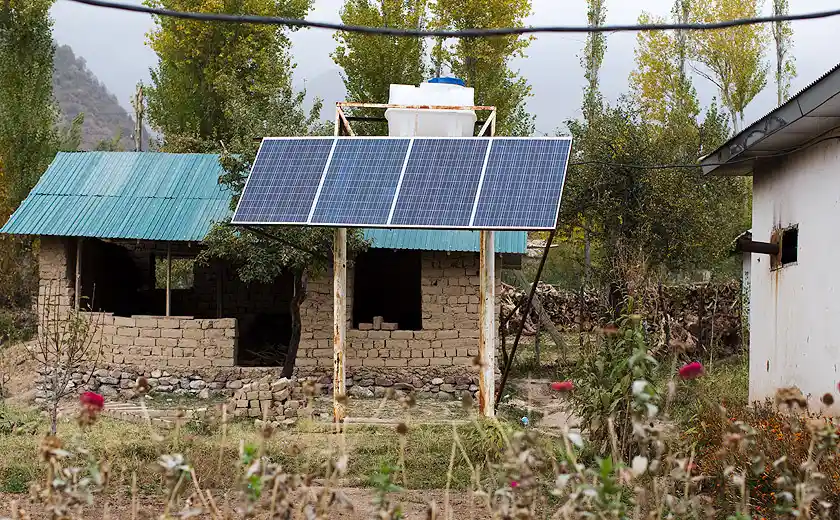
From now on, people will not only be able to use the available energy better, but also to preserve it for the future. Since the beginning of 2017, Welthungerhilfe has been supporting 32,000 residents in the rural areas of central Tajikistan with a project to install more energy-efficient cookers and stoves, insulate their houses and use solar and hydro power.
Since then, hundreds of households have significantly reduced their fuel consumption and demonstrably suffer less frequently from respiratory diseases, as cooking over an open fire is now a thing of the past. Together with local partners, Welthungerhilfe offers further training in crafts and modern technologies in order to spread knowledge about energy-efficient measures.